
Design Once, Build Once: Why Lighting Belongs Up Front
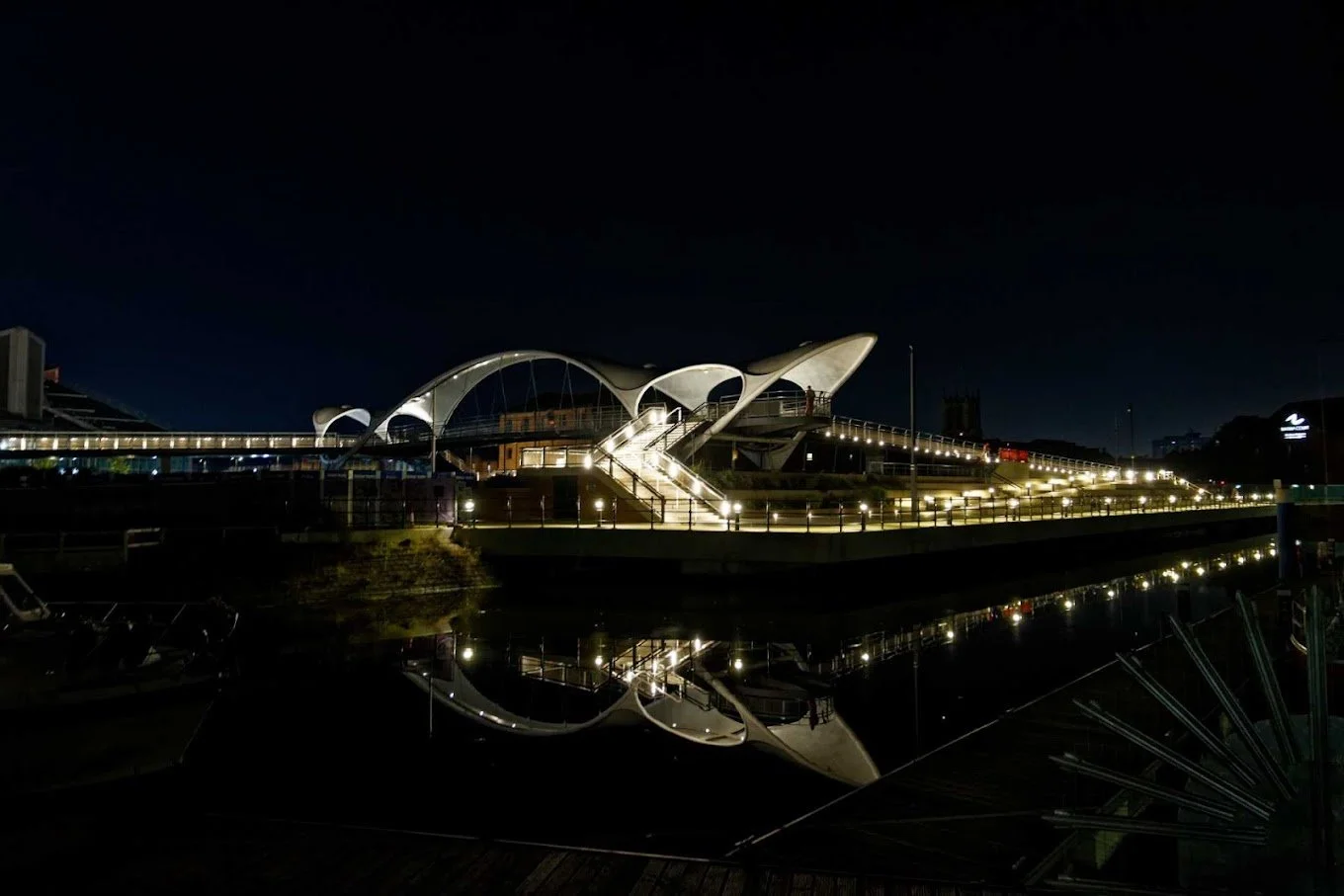
A63 Princes Quay, Kingston Upon Hull
First published in The Railway-News Magazine Issue 1 2026 pp. 56–58, 17th March 2026.
Lighting may only account for a small slice of a rail project budget, but the decisions made early can have an outsized impact on build efficiency, installation complexity and long-term maintenance, writes Geoff Jones, Director of i-vision Lighting Solutions.
Key points
Lighting decisions made early influence cable routing, structural design, power strategy, and compliance outcomes.
Treating lighting as a late-stage item leads to clashes, redesign, added cost, and programme risk.
The true cost of lighting lies in integration, installation, and coordination, not just the luminaires.
Projects that design lighting in from the start achieve simpler installation and fewer on-site compromises.
Early coordination with specialists enables compliant, efficient, and architecturally integrated solutions.
Lighting is often treated as a finishing touch – something to be ‘sorted later’ once the real engineering is done. But in practice, lighting decisions shape far more than how a structure looks after dark. From cable routing and steelwork fabrication to power supply strategy and compliance, lighting can influence programmes, interfaces and cost long before the first luminaire is installed. And while it typically represents just one to two percent of total project value, the consequences of getting it wrong – or leaving it too late – can be far greater.
The false economy of ‘minor’ systems
Because lighting appears relatively low-cost and low-risk, it can fall down the priority list during early design. The problem is that lighting isn’t self-contained. It creates dependencies across civil, structural and electrical packages, and those dependencies don’t go away just because the line item looks small.
Treating lighting as part of core engineering design – not a late-stage add-on – prevents a familiar list of avoidable issues, including:
clashes with containment and structural elements
insufficient power provision
compromised lux levels and poor uniformity
glare risks for drivers and signallers
late design changes to satisfy standards, assurance or approvals
Left unresolved, these issues force last-minute compromises, costly redesigns and potentially disruptive rework – all while the programme clock is still ticking.
When late lighting design becomes a real problem
Time and again, we see the same pattern: lighting gets pushed into the later design stages, and sometimes into construction itself. That’s when straightforward installation quickly turns into technical trouble.
Cable Routing: The “We’ll Deal with it On Site” Moment
On several rail bridge projects, teams have only realised once the steelwork is on site that no allowance has been made for cable routing to the luminaires. Suddenly, what should be routine becomes a structural concern.
Drilling into fabricated, corrosion-protected steel isn’t a simple fix – it triggers additional engineering checks and approvals, adds cost and introduces unnecessary programme risk.
Movement and Expansion Joints: Where Late Decisions Collide with Physics
Cable routing is further complicated by bridge movement. One end is typically fixed and the other floats to accommodate thermal expansion. Late-stage power routes can clash with expansion joints, forcing redesigns in electrical containment that should have been resolved during structural development.
Fixing Points: Nowhere Sensible to Mount Anything
Fixing points are another repeat offender. If lighting hasn’t been considered early, there may be no suitable locations for luminaires, brackets or handrails. At that point, drilling into finished structures – often protected by multiple paint layers – becomes undesirable, awkward and in some cases prohibited without further approvals.
The Real Cost Isn’t the Luminaire – it’s Everything Around it
Lighting is often omitted from early budget thinking because the equipment cost appears modest. But the true cost sits in the “invisible” parts: integration, access, installation labour, containment, testing, approvals and compliance. Those costs escalate rapidly when changes are made late, under pressure, and on site.
The Contrast: When Lighting is Designed-In from the Start
Projects that integrate lighting early consistently show the difference a coordinated approach makes – not just visually, but practically.
Broomhall Way Footbridge, Worcester
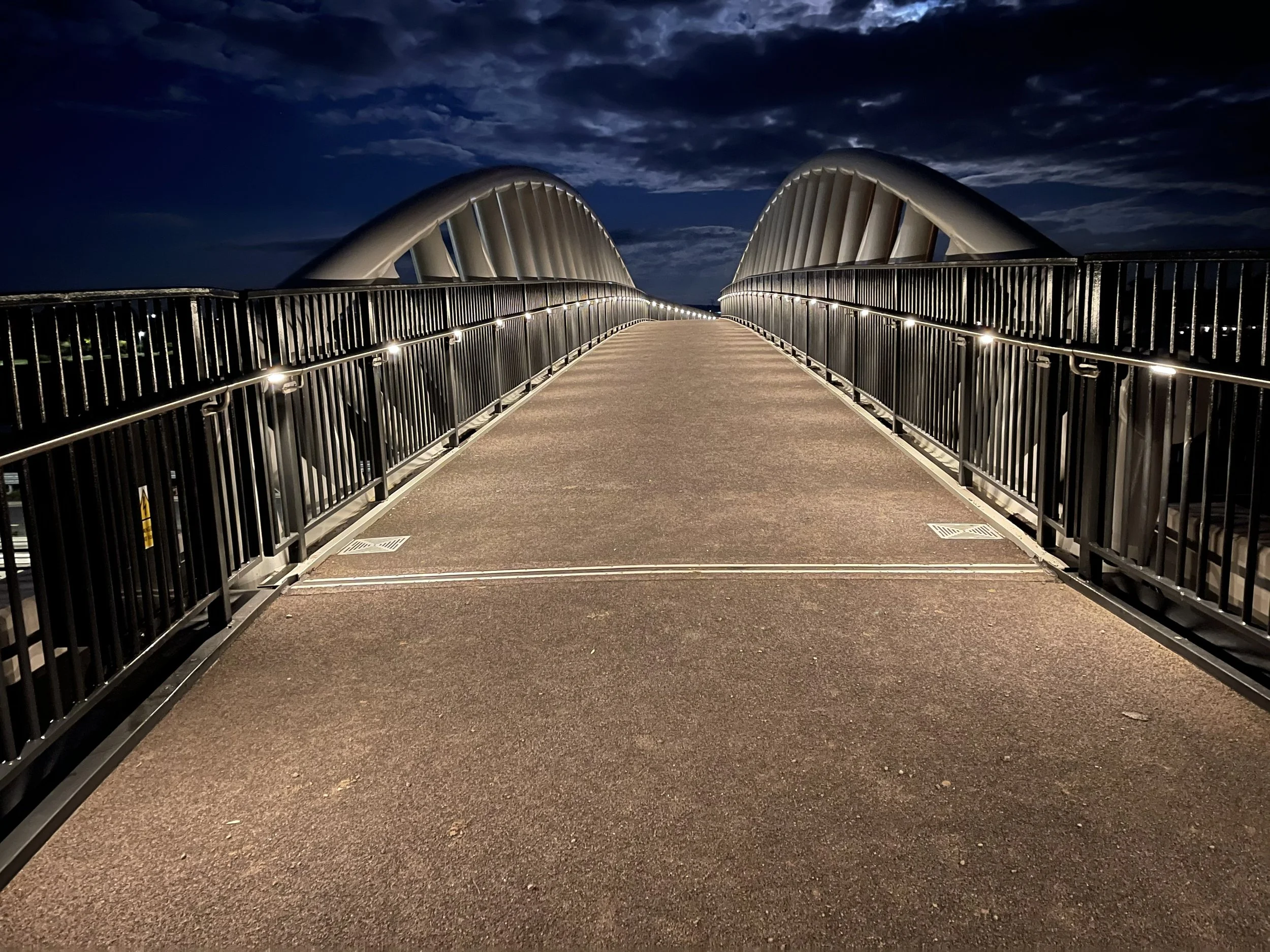
Broomhall Way Footbridge, Worcester
On the Broomhall Way Footbridge, lighting was planned alongside handrail fabrication. That meant electrical circuits, control enclosures and cable routes could be designed into the structure from day one. With a single defined power entry point, and optical planning to manage environmental spill, the system was integrated cleanly, with no structural improvisation required on site.
Princes Quay Footbridge, Hull
A similar approach was used at Princes Quay, where cable routes were built through the main steel structure and bespoke mounting brackets were engineered into the canopy before fabrication.
This allowed both decorative and task lighting to sit naturally within the architecture – with the control system architecture resolved up front, not patched together later.
In both cases, early coordination between structural, electrical and lighting design removed the need for compromises and made installation simpler, faster and more predictable.
Small Workflow Changes That Deliver Big Gains
Better outcomes don’t require major process change – just earlier attention, and a mindset shift.
Treat Lighting as a System, Not a Commodity
Lighting deserves a place in early systems engineering discussions alongside traction power, signalling and civils. That’s how requirements such as uniformity, resilience, emergency operation and maintenance strategy get embedded, not retrofitted.
Define Intent Early – Not Just Compliance
A basic lighting strategy agreed early (performance targets, operational scenarios, environmental constraints and maintenance philosophy) avoids the trap of designing to minimum standards without context, and then reworking later when the real-world needs become clear.
Reserve Physical and Electrical Space from the Outset
Allow provisional space early for columns, brackets, cable routes and feeder pillars. This avoids the common problem of last-minute clashes that force poor mounting heights, awkward relocations or compromised layouts.
Bring in Operations and Human Factors Early
Early workshops with operations and human factors specialists help ensure the lighting design works in the real world. Small choices: luminaire positioning, colour temperature and glare control can have a disproportionate impact on:
driver visibility
platform safety
staff fatigue and comfort
safe access for maintenance
Model Early, Even if it’s Low Fidelity
Early-stage calculations and quick visualisations can reveal risk long before detailed modelling begins. That reduces the chance of late changes driven by assurance, testing or performance shortfalls.
Why Early Specialist Input is the Fastest Route to Certainty
The simplest way to reduce risk is to involve a lighting specialist early enough that their input shapes the wider design – before fabrication and installation decisions get locked in.
At i-vision, our team includes lighting designers and mechanical engineers who can work alongside consulting engineers to integrate fittings, fixings and cable routes into the structure without compromising the architectural intent. Where required, this can include bespoke adaptations to match specific design concepts – an approach that’s only practical when lighting is considered early.
Crucially, that early coordination comes at relatively low cost. But the value is significant: smoother installation, fewer compliance headaches and a finished result that genuinely reflects the designer’s vision – especially when infrastructure is first revealed after dark.
By taking ownership of the lighting element of the specification early, specialists like i-vision can remove uncertainty and detailed coordination burden from consulting engineers, while delivering a tender-ready package in return.