
Broomhall Way Footbridge: 300+ Luminaires — One Seamless Lighting Solution
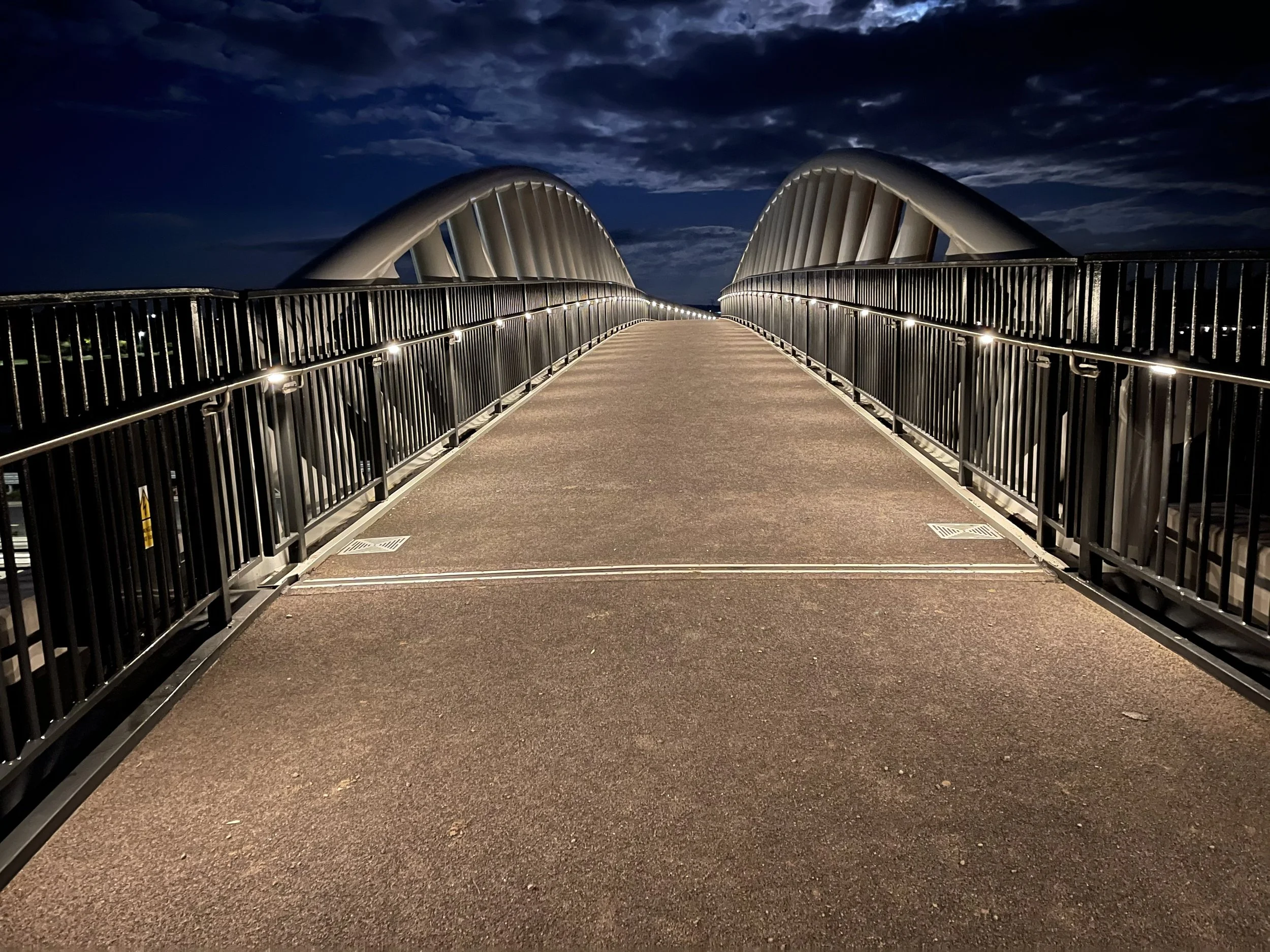
When the lighting has to disappear — but the performance can’t
Integrated handrail lighting delivering safe, uniform illumination across a major pedestrian and cycle crossing.
The Broomhall Way Footbridge crosses the A4440 Southern Link Road in Worcester, creating an important connection between new residential and commercial development and Power Park in St Peter’s.
But lighting a bridge like this isn’t simply a case of putting luminaires onto a handrail.
The challenge was to deliver consistent P4 illumination across the entire crossing, control light spill into the surrounding environment, and integrate more than 300 luminaires into a stainless-steel handrail without compromising its appearance or structural detailing.
That meant the lighting, bridge structure, fabrication and electrical systems had to be designed to work together from the beginning.
The challenge: light where it’s needed — and nowhere else
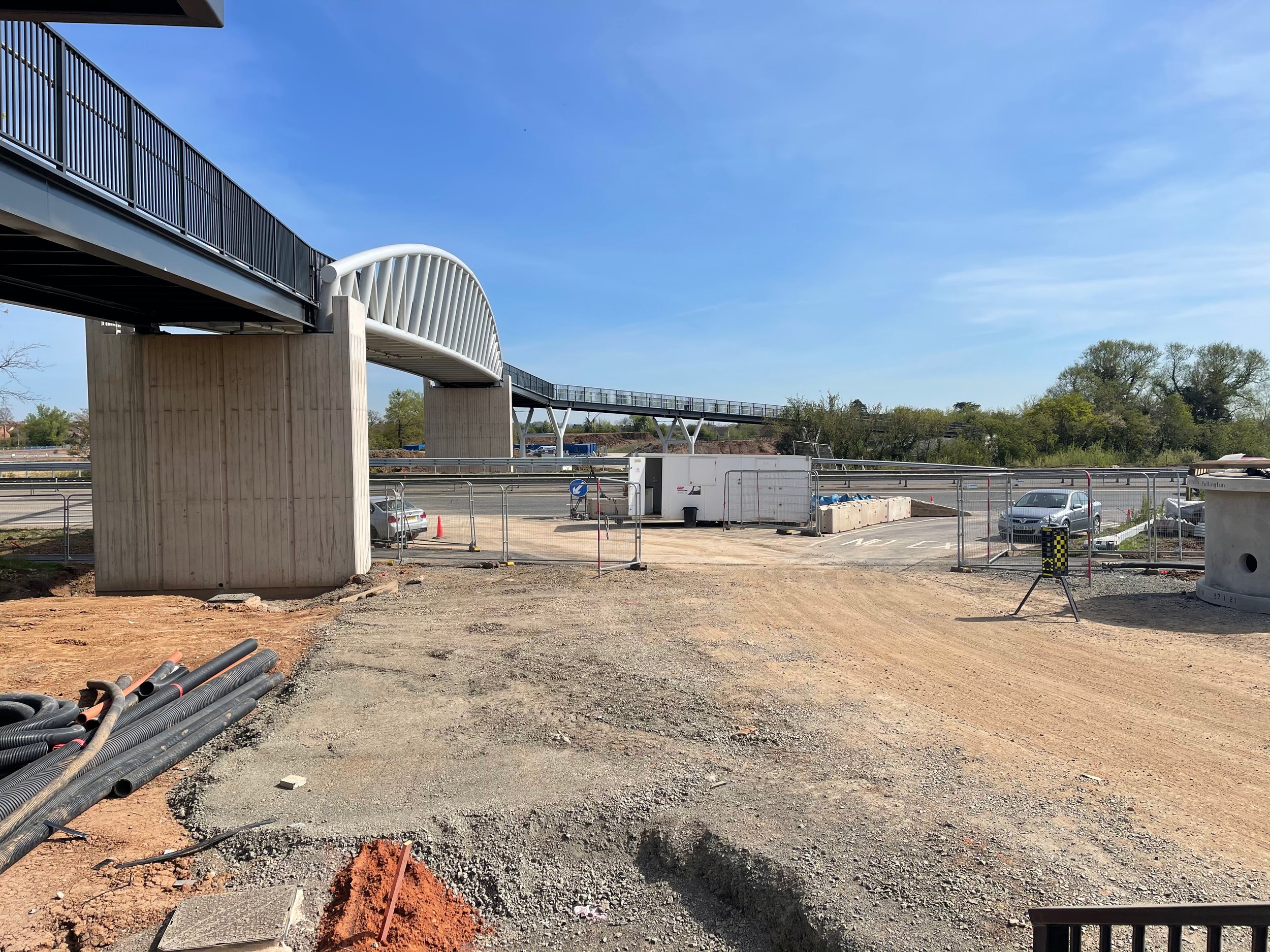
Broomhall Way sits in an open urban-edge environment, where uncontrolled upward light and spill could have a significant visual impact.
At the same time, pedestrians and cyclists needed comfortable, consistent illumination across the complete span.
The lighting therefore had to achieve three things simultaneously:
Uniform P4 lighting performance across the full bridge.
Minimal light spill and upward light beyond the areas being illuminated.
A discreet architectural integration that didn’t turn the handrail into a visually dominant lighting feature.
And there was another significant challenge: scale.
More than 300 luminaires were to be integrated into the stainless-steel CHS handrail. With that many individual light sources, small errors in fabrication, positioning or electrical distribution could quickly become a major installation problem.
The solution: design the lighting as part of the bridge
Working with Lighting Integration, I-Vision developed an integrated Pictor handrail lighting solution, with the lighting strategy coordinated with the structural and architectural design from an early stage.
Rather than treating the lighting as an item to be added after the bridge was designed, the luminaires became part of the handrail system itself.
The electrical design was equally important.
The completed installation uses:
300+ integrated luminaires
15 SELV 24V lighting circuits
4 stainless-steel control enclosures
1 230VAC incoming supply
The 230VAC supply is routed from one side of the bridge to feed the control enclosures, with the lighting distributed through multiple SELV circuits. This provides a structured and maintainable electrical architecture across the long-span structure.
Precision fabrication meets precision lighting
The stainless-steel CHS handrail was manufactured by Britons Fabrication, including the machining of the individual luminaire apertures.
This was a critical part of the process.
With hundreds of luminaires integrated into the handrail, accurate aperture positioning and close coordination between the lighting and fabrication teams were essential to achieving the clean, continuous appearance required.
The handrail, luminaires and control enclosures were installed as a coordinated system, rather than as separate components.
The result
The finished bridge delivers safe, comfortable and consistent illumination for pedestrians and cyclists, while keeping the lighting visually restrained and protecting the surrounding environment.
The luminaires become part of the architecture rather than an addition to it.
And that’s ultimately what makes the project successful: you notice the quality of the lighting, rather than the lighting equipment itself.
A better way to light bridges
Broomhall Way demonstrates what is possible when lighting is considered early enough to become part of the bridge design.
For bridge designers, fabricators and engineers, the lesson is simple:
Don’t design the bridge first and work out the lighting afterwards.
When the structural design, handrail, luminaires, electrical distribution and installation strategy are coordinated from the outset, the result can be cleaner, safer, easier to maintain — and considerably more successful.